EQUIPMENT & DOCUMENTS
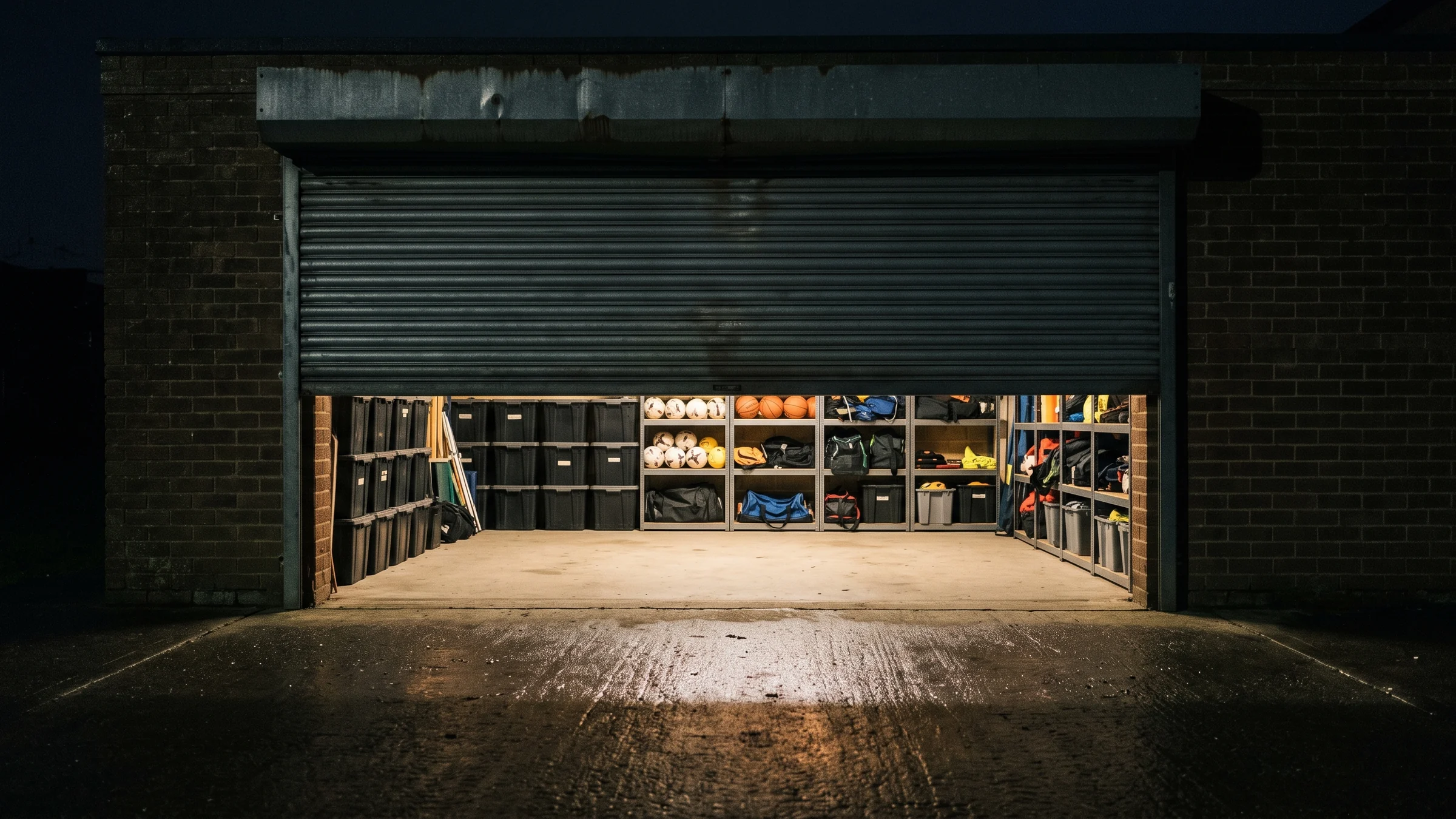
What is in the store room, and the paperwork a club hands out. Counting it and collecting it have always been left to somebody’s memory. NEWDIH keeps the two in the same place.
The equipment ledger is free. Documents and e-consent is a module at 1,000 yen a month.
THE PROBLEM
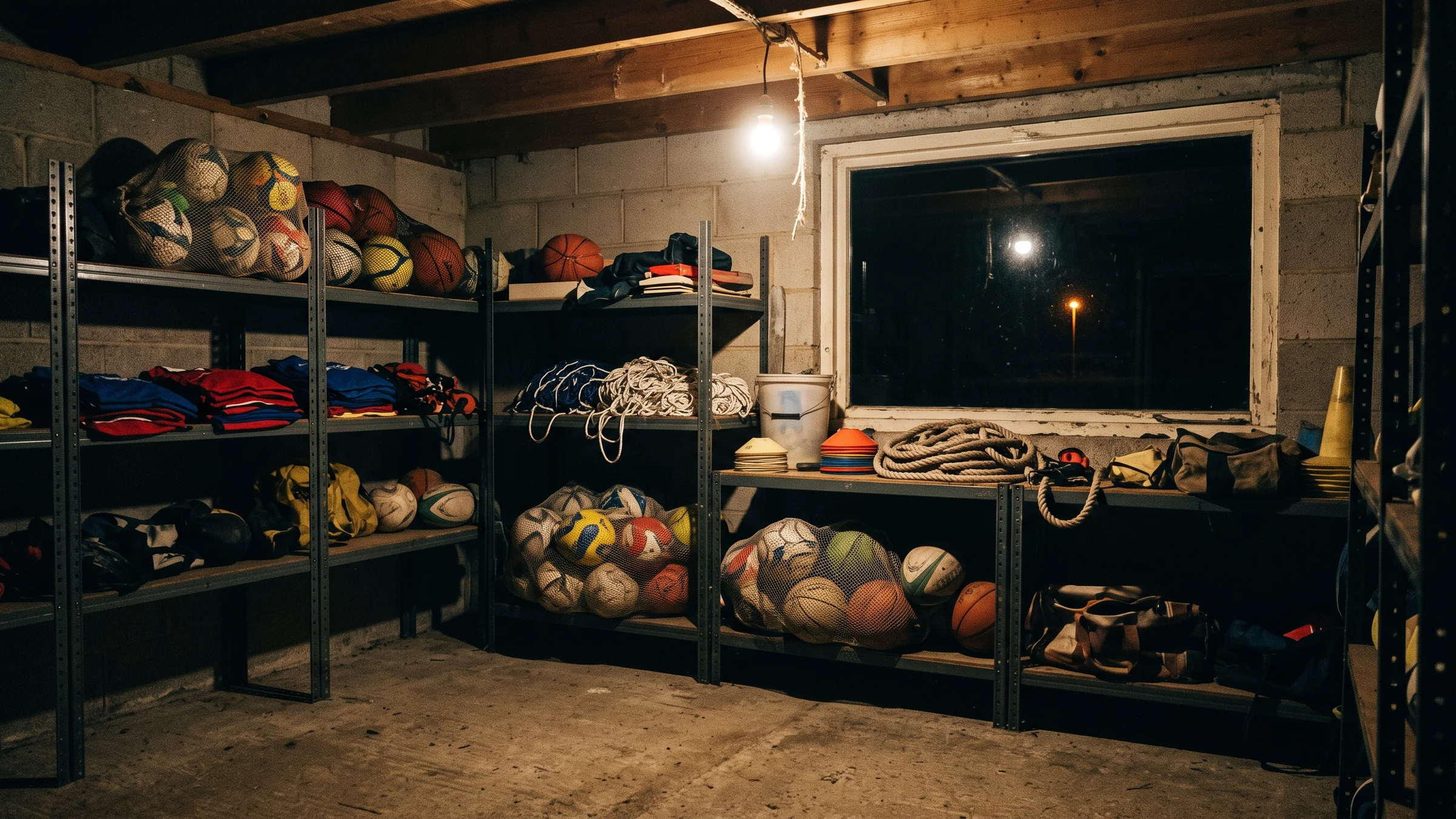
Usually one person can say how many balls there are. Someone takes them home, the next weekend arrives, and you find out something is missing on the morning of the match. Paperwork is the same: you cannot say who has not returned a consent form until you count the pile in someone’s hands. Both are the same question — where did our things go — yet one lives in a store room and the other in a stack of paper. NEWDIH keeps the two in one place.
01 — KEEP
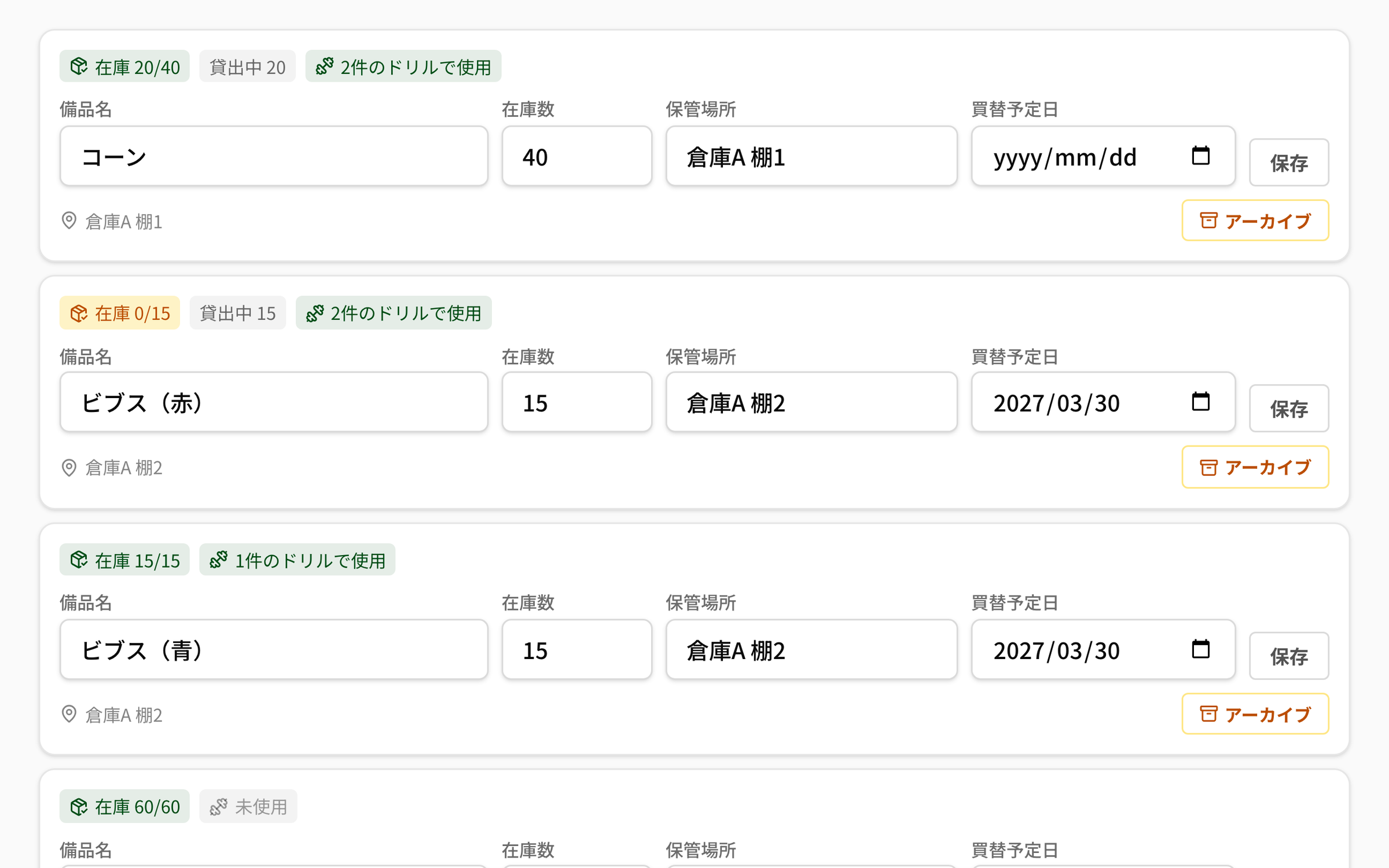
How many cones, how many bibs are left. Enter a name, a count and a place once, and what you have on hand is always there. The count drops by whatever you lend out and comes back when it is returned.
STOCKWhat you can use now is shown as the total minus what is out on loan. No subtraction by hand
PLACEThe place holds up to 120 characters — down to the shelf number
RENEWYou can set a replacement date
NAMEAn item name holds up to 40 characters. The same name cannot be registered twice, so duplicates do not pile up
COUNTThe count runs from 0 to 100,000
DRILLAn item used by a training drill shows how many drills it is used in
Badges in the listStock 20/40・On loan 20・Used in 2 drills
02 — LEND
Balls and bibs go home with someone every session. Write down who borrowed them, how many and when they are due, and you can see whose hands anything is still in. Whatever is past its date makes itself visible without being chased.
WHOA borrower holds up to 80 characters — a person or a team
DUEThe return date is optional. Past it, a red “(overdue)” appears
QTYOne loan runs from 1 to 100,000. A loan larger than what is left in stock cannot be recorded
NOTEA note holds up to 500 characters — “taken for Sunday’s away trip”, for instance
BACKPress “return” and it goes back into stock. The loan itself is not erased
KEEPEquipment you no longer use can be archived out of the list. Nothing is deleted, so drills you built in the past keep their reference. You can bring it back later
What a loan row showsBorrower・Qty・Due date・(overdue)
03 — HAND
The rules you hand out at sign-up, consent for photographs, what to do in the heat. All of it used to be printed, handed round, collected and counted for missing names. Now it lives in the app, and you choose who each one goes to.
WHOYou choose the audience from three, and it can differ per document
TITLEA title holds up to 200 characters
BODYThe body holds up to 50,000 characters — a whole set of club rules fits
EDITWhen you change the text, you choose whether to raise the version. Leave it for a typo, raise it when the substance changes
HIDEA document you stop handing out is archived. Nothing is deleted, so the consents given at the time stay
OPENThe list shows how many have agreed so far, one line per document
Who it goes to (exactly as the app shows it)Everyone・Guardians・Players
04 — TRACE
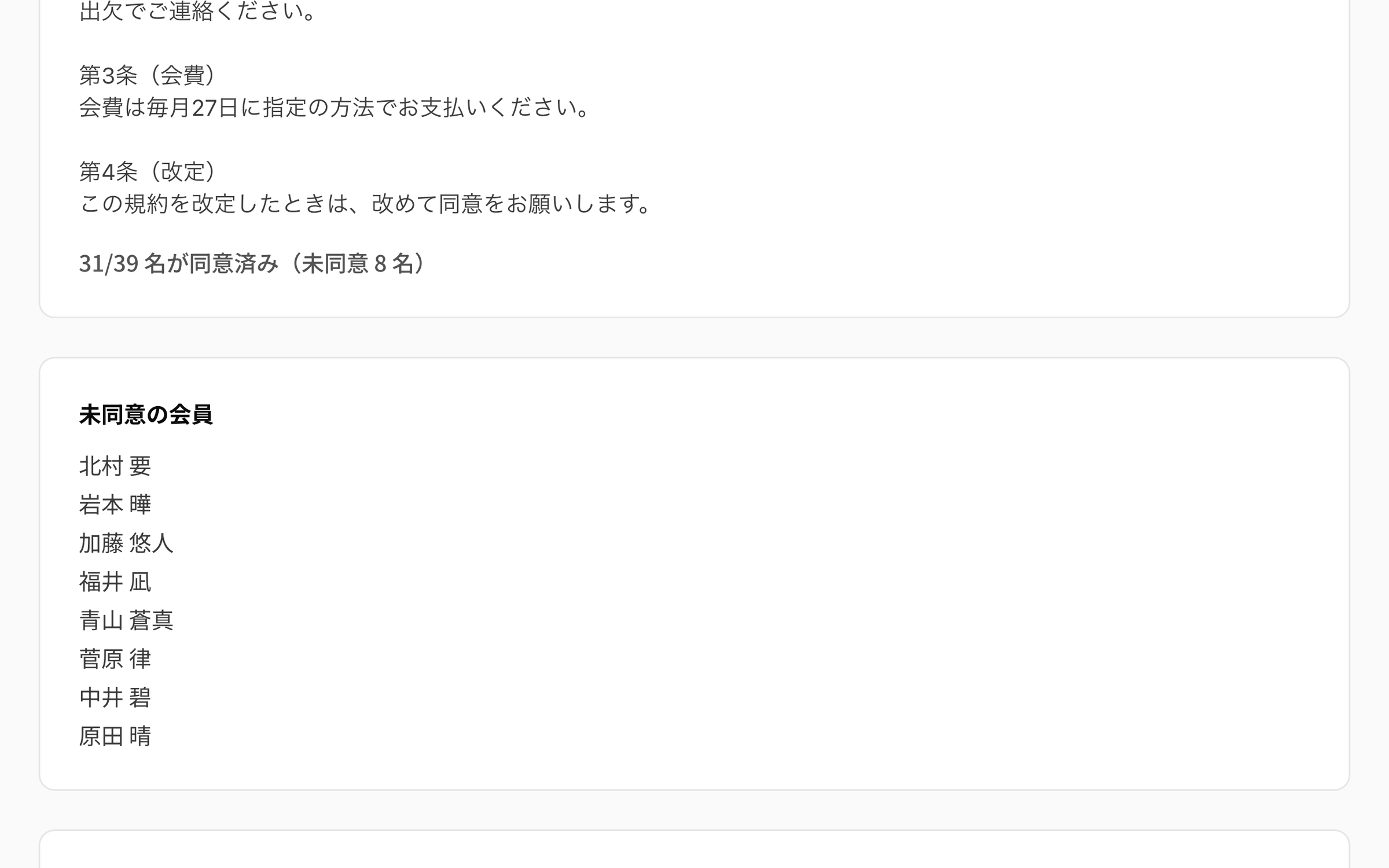
Not “how many more?” but “who?”. Open a document and you see how many have agreed and the names of those who have not. You know exactly who to speak to, so you never have to chase everyone at once.
COUNTHow many agreed, how many it applies to and how many are left appear on one line
NAMEThose still pending are listed by their name on the roster
BASEThe number it applies to is drawn from the club’s members. Fix the roster and it follows
AGAINRaise the version and everyone goes back to pending on that document
WHOAdding, revising and reading consent status is done by the club owner
MEMBERThe consent itself is pressed by the member
What the detail showsVersion・How many have consented・How many are pending・Members pending consent
05 — SIGN
A member reads the text on their own screen and presses “consent”. What is recorded cannot be rewritten or deleted, and every revision adds another line. That this is not a signature in itself is written plainly on the screen before they press.
ADDConsent records are append-only. They cannot be rewritten or removed afterwards
VEREven the same person on the same document leaves one line per version. The whole history stays
IPWhat is kept is the time and an identifier blurred to city level. The raw IP address is not stored
LAWThat this is not an advanced electronic signature under the Electronic Signature Act is written on the screen that asks for consent
SEEA member sees only the documents addressed to them
BACKAn archived document cannot be consented to
States on the member’s screenConsented・Pending
Enter the item name, the count and where it is kept. All of this is free.
Enter who borrowed it, how many and when it is due. Anything past its date makes itself visible.
Put your rules and consent forms in, then choose who they go to. Whoever is left shows up by name.
The equipment ledger is free, with no cap on how many items you register. Documents and e-consent is a module at 1,000 yen a month; until you subscribe, the documents screen does not open.
Archive it instead of deleting it. Archiving only takes it out of the list; drills you built in the past keep their reference. You can bring it back later with “restore”. Item names cannot repeat within a club, so you also cannot recreate an archived item under the same name.
No. Guardians do not hold accounts of their own. A minor player’s own account is the one tied to their guardian’s contact details, so a document addressed to “guardians” arrives at that minor player’s account, and the consent pressed there counts as the guardian’s. When the audience is “players” or “everyone”, it applies to every member of the club, adult or minor.
That is your choice. When you save a document you decide whether to tick “ask for consent again with this revision (raise the version)”. Tick it and the version number goes up by one and everyone returns to “pending” on that document. If you only fixed a typo, save without ticking and the consents stand. Consents given to the earlier version are not erased either.
It does not. This records the moment someone pressed “consent”, which is a confirmation of intent, not the advanced electronic signature described in the Electronic Signature Act — the kind that proves identity by cryptography. That is written at the top of the screen where a member presses consent. What is kept is the time of the consent and an identifier blurred to city level; the raw IP address and location are not stored.
Not for now. Both are handled by the club owner alone. What can be delegated to a coach is venue booking, the alumni roster, away trips and training camps — four things, and equipment and documents are not among them. Pressing one’s own consent is the one part everyone but the owner can do.
You can start by writing down a single item. The equipment ledger is free.